Looking for soccer games that feel like the real sport? Pick a game that matches how you like to play, then learn the rules behind it, and the matches make far more sense.
| Item | Value |
|---|---|
| Individual laws in the Laws of the Game | Seventeen |
| Year the Laws were formally adopted by the Football Association | 1863 |
| Year IFAB began maintaining the Laws | 1886 |
| Goals scored at the 2022 World Cup | 172 |
| People engaged with the 2022 World Cup | Around five billion |
Figures come from Wikipedia’s Laws of the Game article and FIFA’s 2022 annual report. They can change, so check the source before you rely on them.
What soccer games are trying to copy
Every soccer game on your phone is a simplified model of a real sport with a long history. Knowing the original helps you see why a game asks you to pass, press, hold shape or take a risk.
The sport is played by two teams who try to put a ball in the other side’s goal, mostly without using their hands. Goalkeepers are the exception inside their own area. Everything else, from tactics to substitutions, grows out of that simple idea.
Mobile developers pick different parts of the sport to focus on. Some give you direct control of each pass and shot. Others hand you the clipboard and let you pick the lineup. A few turn the whole thing into card collecting.
This guide is an independent overview. It is not connected to any club, league, game studio or governing body it mentions.
The rules that shape every match
The official rulebook is called the Laws of the Game. According to Wikipedia, “The extant Laws date back to 1863 where a ruleset was formally adopted by the newly formed Football Association (FA) and written by its first secretary, Ebenezer Cobb Morley.” The same page notes that the Laws “consist of seventeen individual laws”.
Since 1886 the rules have been looked after by the International Football Association Board, usually shortened to IFAB. A change needs broad agreement between FIFA and the four British associations, which is why the rules shift slowly and in small steps.
Most games reduce those laws to a handful of ideas you feel while playing:
- Fouls and free kicks: rough tackles stop play and give the other side a set piece.
- Throw-ins, corners and goal kicks: restarts after the ball leaves the pitch.
- Penalties: a set piece awarded for certain fouls by defenders in their own penalty area, taken as a one-on-one shot at the keeper.
- Cards: yellow for a warning, red for sending a player off.
- Offside: a rule that stops attackers waiting next to the goal.
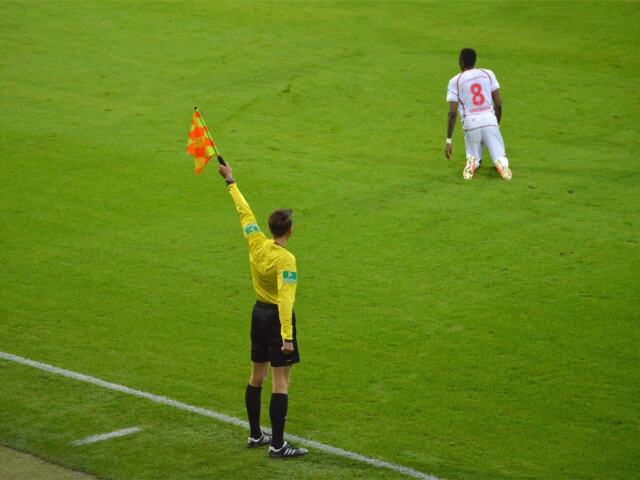
Offside confuses almost everyone at first. Our explainer on what is offside in soccer walks through it with plain examples, and it also explains why games sometimes flag your striker even when it looks fine on screen.
Why the sport travels so well
Soccer needs little equipment, so it spreads easily and is played on streets, beaches and school yards. That same simplicity makes it a natural fit for games, because the core loop is easy to understand within a minute.
The scale of attention is huge. FIFA’s report on the 2022 World Cup states, “Around five billion people engaged with the FIFA World Cup Qatar 2022, following tournament content across an array of platforms and devices across the media universe.” That is FIFA’s own engagement measure, so treat it as a broad reach figure rather than a count of match viewers.
The same report says, “A total of 172 goals were scored, eclipsing the previous tournament record of 171 goals, achieved in 1998 and 2014.” Big tournaments like this fuel interest in games that let you play out your own version of those moments.
Types of soccer games on mobile
Not all soccer games ask for the same skills. Choosing the right type saves you from downloading something that frustrates you.
Arcade and simulation games
These put you on the pitch. You move players, pass, shoot and tackle with touch controls or a virtual stick. Simulation titles aim for realistic movement, while arcade titles favour fast goals and flashy skills.
If you like quick sessions on a commute, arcade play is a good start. Our lists of the best soccer games for android and the best soccer games for iphone compare options on each platform.
Manager games
Manager games swap reflexes for decisions. You set a lineup, choose a style, handle transfers and watch the match unfold. They suit players who enjoy planning and spreadsheets more than thumb speed.
You can browse the best soccer manager games for mobile if that sounds like you. Many of these games run for months, so the pace is slow and steady.
Card collecting and live-service games
Some titles revolve around building a squad from cards or packs, then playing short matches or events. These often rely on online servers, regular updates and in-app purchases. Read the store listing carefully and set spending limits if the game offers purchases.
Offline games
Not everyone has stable data. Offline titles let you play on a flight, on a train or in a spot with no signal. We cover them in our guide to the best offline soccer games for mobile.
How the real game works and how to pick a game
Tactics you will see in menus
Even simple games borrow tactical ideas. Learning them gives you an edge against the computer and against friends.
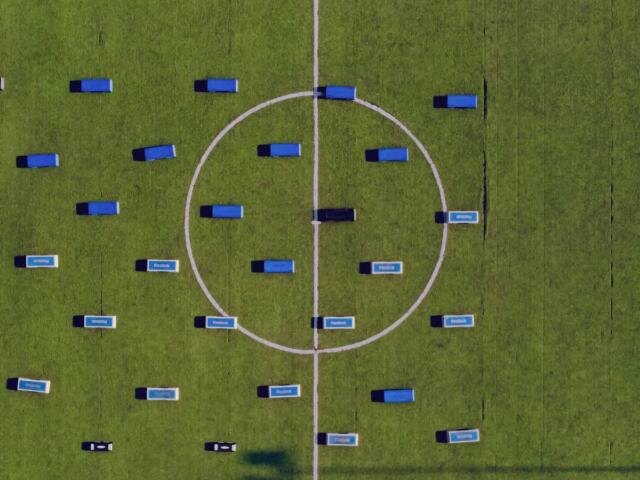
The most visible idea is the formation, the way players are spread across the pitch. A back line of defenders, a midfield and a set of forwards can be arranged in many ways, and each choice trades safety for attack. Our guide to soccer formations explained breaks down the common shapes in simple terms.
Other tactical ideas show up under different names in game menus:
- Pressing: chasing the ball high up the pitch to win it back quickly.
- Width: stretching the team so defenders have more ground to cover.
- Tempo: how fast the team moves the ball before taking a shot.
- Defensive line: how far up or back your defenders stand.
A high line and heavy pressing can win the ball quickly, but they leave space behind your defenders. A deep line is safer, though it hands the opponent more of the ball. Most games let you swap these settings mid-match, so test them rather than guessing.
Positions and roles you control
Whether you play on the pitch or manage from the touchline, you will meet the same set of roles. Understanding what each one does makes lineup screens far less intimidating.
- Goalkeeper: the last line of defence and the only player allowed to handle the ball in open play inside the penalty area.
- Defenders: centre-backs guard the middle, while full-backs cover the sides and often join attacks.
- Midfielders: they link defence and attack, win the ball back and set the rhythm of the match.
- Forwards: they create and finish chances, either as central strikers or as wide attackers.
Games usually rate each player on attributes such as pace, passing, shooting, tackling and stamina. Matching players to a style is half the fun, and it is the core skill in manager games.
Stamina deserves special attention. Tired players make poor decisions and lose duels, so most games reward you for rotating the squad or making substitutions. If your team fades late in matches, check fitness before you blame the formation.
How a typical match flows
A match is built from short phases that repeat. Seeing those phases helps you decide where to spend your attention, on screen or in the tactics menu.
Build-up
The team in possession moves the ball from the back towards the middle. Safe, short passes keep the ball and drag the opponent out of position. In a game, this is when you should be patient and look for space rather than forcing a shot.
Chance creation
Once the defence is stretched, a through pass, cross or dribble can open a clear shot. Good players in games make this look easy, but timing is the secret. A pass played slightly too early or too late usually ends in a lost ball or an offside flag.
Transition
The moment possession changes is the most dangerous. A team that loses the ball while its defenders are out of position can concede quickly. Keeping a sensible balance between attackers and defenders is the simplest way to avoid that trap.
Set pieces
Corners, free kicks and penalties are planned moments. Many games give you simple aiming tools for them, and practice pays off. Even small improvements in set-piece accuracy can swing close matches.
Choosing a game that fits you
With so many options, a short checklist keeps you from wasting time. Ask yourself what you actually want from a session.
- Time: do you want a quick match or a long campaign?
- Control: do you want to steer players yourself or make decisions from the sideline?
- Connection: will you always have a signal, or do you need offline play?
- Spending: are you comfortable with a game that sells optional extras?
- Device: does your phone have enough storage and performance for a large download?
Read recent reviews rather than only the star rating, since updates can change how a game plays. Look for comments about controls, ads and how often purchases are pushed. A game that respects your time usually says so in its reviews.
It also helps to try one game at a time. Give a new title a few sessions, learn its controls, and only then decide whether to keep it. Deleting a game that does not suit you is a perfectly good outcome.
Beyond the screen: learning the real game
Many players find that soccer games send them back to the real sport. After a few matches you start to notice shapes, pressing and the way a team moves together on television.
That works in both directions. Watching a real match with your game knowledge in mind shows you why a manager makes a substitution or why a team drops deep to protect a lead. You begin to read the match rather than only follow the ball.
If you want to go further, simple steps help:
- Watch one full match and follow a single position the whole time.
- Pause on a goal and trace the passes that created it.
- Compare the formation on screen with the one in your favourite game.
- Read a short rules summary before the next big tournament.
Even a casual interest in the real sport makes the games richer. Likewise, the games make the sport easier to follow for newcomers, which is why so many fans describe them as a gateway.
Common mistakes new players make
Most early frustration comes from a few repeatable habits. Fixing them is quicker than hunting for a better game.
- Spamming the shoot button: shots from poor angles rarely score, so work the ball into a better position first.
- Chasing the ball with every defender: this drags your team out of shape and leaves gaps behind.
- Ignoring tactics screens: a small change to width or pressing can fix problems that practice alone will not.
- Playing while tired or annoyed: quick, sloppy passes follow, and losing streaks get longer.
- Spending before learning: extras do not replace understanding the controls and the basic shape of a match.
Treat each loss as information. Replay the moment the goal was conceded, ask where the gap appeared, and adjust. That simple routine works in every kind of soccer game and mirrors how real coaches review matches.
Getting better at soccer games
Improvement comes from a few habits rather than secret tricks. Start by learning the control scheme in practice mode, then play on an easier difficulty until passing feels natural.
Defending is where many players struggle. Charging at the ball carrier often opens gaps, so patience matters more than speed. Our guide on how to defend in soccer games covers positioning, timing and when to commit to a tackle.
For wider advice on controls, settings and match habits, see our collection of tips for soccer mobile games. A few quick habits help straight away:
- Use short passes to build play before trying a long ball.
- Keep your defenders between the ball and your goal.
- Take shots from good positions rather than from far out.
- Rest between sessions so your touch stays sharp.
- Check the settings for control sensitivity and button layout.
Playing sensibly and safely
Mobile games are built to hold your attention, so decide in advance how long you want to play. Short sessions are easier to enjoy and to fit around school, work and sleep.
If a game sells packs or currency, check what each purchase actually contains before you spend, since some items may depend on chance. Parents can use the device’s built-in purchase controls to require approval before spending. Free options exist in every category, and many are enjoyable without paying.
Download games only from your phone’s official app store, and check permissions before you install. For more on this topic, browse our wider pages on mobile games and gaming.
A simple weekly routine
If you want steady progress without burning out, a small routine works well. Treat it as a suggestion and adjust it to your own schedule.
- Play a few relaxed matches to warm up your passing and movement.
- Pick one skill, such as defending or set pieces, and focus on it for a session.
- Review one match you lost and note where the main gap appeared.
- Try one new tactical setting and see how the team responds.
- Take a day off from the game and, if you like, watch a real match instead.
This approach keeps the game fun and gives each session a purpose. Over a few weeks you will notice cleaner passing, calmer defending and better decisions in the final third. Players who work on one thing at a time usually improve faster than those who change everything at once.
Finally, remember that games are for enjoyment. A close defeat after a good tactical idea teaches more than an easy win, so keep experimenting and keep the pressure light.
Frequently asked questions
What is the best type of soccer game for beginners?
Show answer
Arcade-style games with simple controls are the easiest to start with. They let you score early and learn passing and shooting without learning every rule first.
Do I need to know the rules to enjoy soccer games?
Show answer
No, but a little knowledge helps. Understanding fouls, restarts and offside makes the match feel less random and helps you play smarter.
Can I play soccer games without internet?
Show answer
Yes. Many titles work offline, especially those with single-player modes. Games built around online matches, events or card packs usually need a connection.
Who writes the rules of real soccer?
Show answer
IFAB maintains the Laws of the Game. According to Wikipedia, it has done so since 1886, and changes need agreement from both FIFA and the British associations.