

Wondering how do esports work when you watch a match and can’t tell what is at stake? In short, publishers own the games, while leagues, tournaments and teams build seasons and events on top.
This guide is part of our gaming section.
| Item | Value |
|---|---|
| Typical league phases | Three: regular season, playoffs, seasonal cycle |
| Franchised league relegation | None; teams keep their spot regardless of performance |
| Esports World Cup 2025 prize pool | More than $70 million |
| Esports World Cup 2025 Club Championship | $27 million shared by the top 16 clubs |
| Esports World Cup 2025 line-up announced | 25 tournaments in 24 games |
The figures come from XP League’s league guide and Sports Video Group’s April 2025 report. They can change, so check the sources before you rely on them.
The basic building blocks
Competitive gaming looks chaotic from the outside, but it has a fairly simple layout. Four kinds of players in the ecosystem do most of the work.
- Publishers make the game and control its rules, balance changes and licensing.
- Leagues run scheduled seasons with a set group of teams.
- Tournaments are shorter events with a fixed start and end.
- Teams (often called clubs or organizations) sign players and coaches and enter the competitions.
Fans, sponsors and broadcasters sit around this core and pay for much of it. A single game can have all four layers at once, or only a few.
What publishers actually control
A game is someone’s product, so the company behind it decides whether and how others can run events with it. Some publishers run their own top-level competition. Others license events to outside organizers and set rules about how those events may use the game.
That is why the same game can have an official league and several independent tournaments. It is also why a competitive scene can change quickly when a publisher changes its policy or ends support for a game.
For players, the practical effect is that the rules of the game and the rules of the competition are linked. A balance patch can change which characters or strategies are strong in the middle of a season.
How leagues are run
A league works much like a traditional sports league. According to XP League, “Most leagues follow a three-phase system: Regular Season: Teams compete in scheduled matches, earning points or rankings based on their performance.”
After that, “The top teams from the regular season advance to an elimination stage, where the competition intensifies.” The same guide adds that “Most leagues operate on a yearly or seasonal cycle”, so the process typically repeats each season or year.
Franchised and open leagues
Leagues usually take one of two shapes. In a franchised league, a team buys or is granted a permanent slot. The same guide notes that “Teams in professional franchised leagues do not face relegation from governing bodies, meaning they maintain their spot regardless of performance.”
In an open system, teams earn their place through qualifiers and results. A bad run can cost a team its spot, and a strong amateur team can rise.
Amateur and school-level play
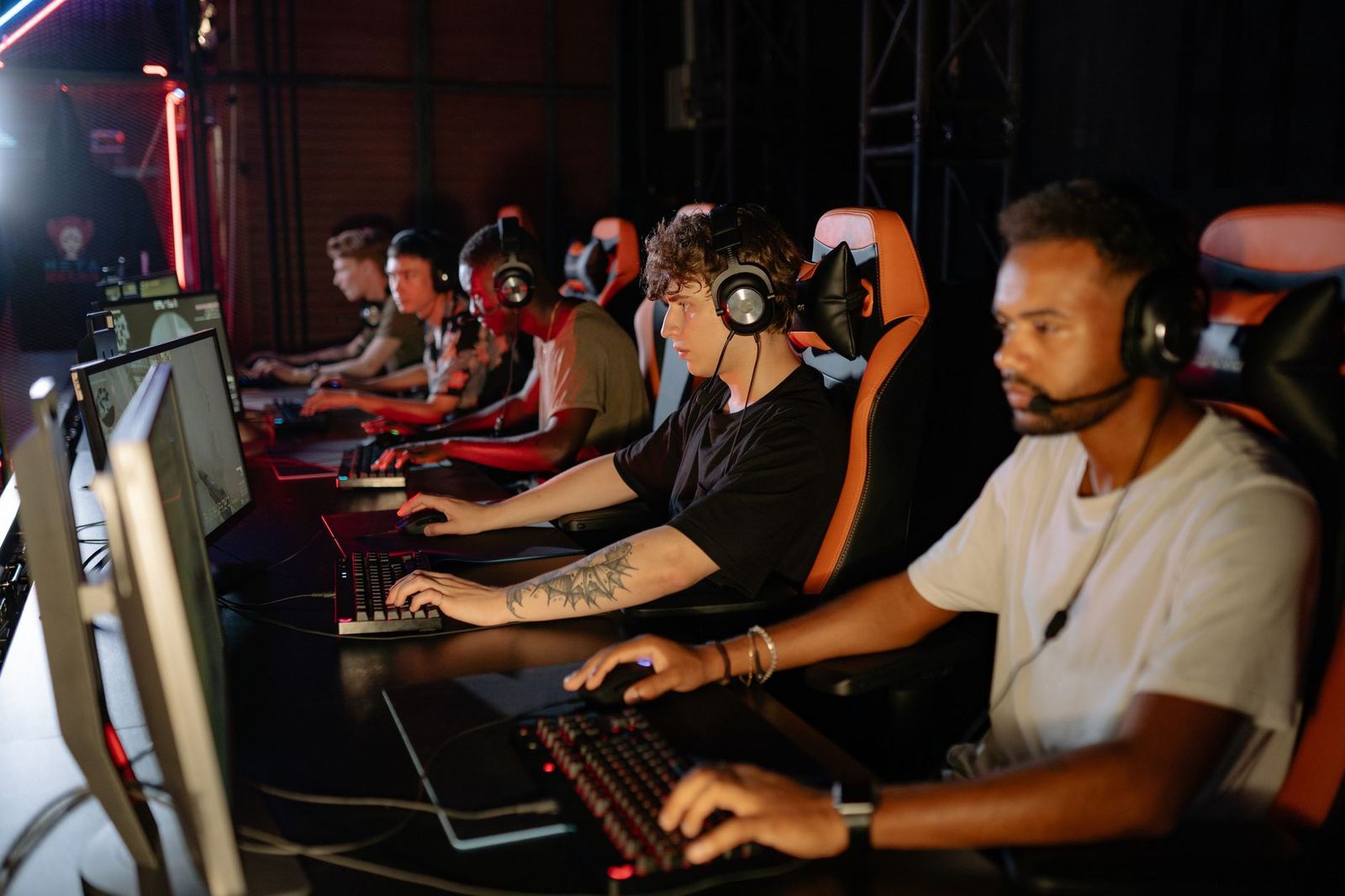
Below the pro level sit smaller competitions. XP League says “Amateur leagues may be organized by game publishers, third-party organizations, or community-run groups.” These circuits are where many players build experience before any pro contract.
Teams, players and the people behind them
A team is a business as much as a squad. It signs players, hires coaches and analysts, and pays for equipment and training space. Money usually comes from sponsors, prize winnings and, in some leagues, shared revenue.
Players are normally signed on contracts that set pay, duties and how long they stay. Some compete solo, while others play in squads where each person has a role, such as leader, support or attacker.
Around the players sits a staff that fans rarely see:
- Coaches plan strategy and review matches.
- Analysts study opponents and game updates.
- Managers handle travel, contracts and schedules.
- Content teams produce videos and social posts for sponsors and fans.
Not every team belongs to a league. Many organizations simply enter whichever open tournaments suit them, which is why you can see the same club name in several different events.
How tournaments differ from leagues
A tournament is a one-off event, so there is no long season. Many use brackets where a loss can knock a team out. Others begin with group stages, where every team plays several matches before the top finishers move on.
Tournaments often draw teams from several leagues or regions. A win there can matter more for a team’s reputation than a regular-season record, because the best opposition is in one place.
Most events still follow the same basic steps:
- Teams qualify through rankings, regional events or invitations.
- A group or opening stage sorts the field.
- An elimination stage narrows it to a final.
- Prize money is paid out by placement.
Example: the Esports World Cup in 2025
The Esports World Cup shows how big an event can get. In its April 2025 announcement, reported by Sports Video Group, the event prize pool was “$70+ million” and marked “a $10 million increase from last summer’s inaugural event.”
The same report said “With 25 tournaments in 24 games announced to date”, the event would draw more than 2,000 elite esports players and 200 top clubs. Its Club Championship, a cross-game format, “will award $27 million of the $70+ million total to the top 16 Clubs based on their overall performance, with $7 million allotted for the 2025 winner.”
The key idea is that clubs compete across many games at once. That rewards organizations that field teams in several titles, not only one.
How to follow a match as a newcomer
Start with one game and learn its basic rules before worrying about the wider scene. Most broadcasts show a bracket or standings table, which tells you quickly what each result means.
When you open a new event, check three things:
- Is it part of a league season, or a one-off tournament?
- Which stage is it: group, playoff or final?
- Does a loss end a team’s run, or can it still recover?
Those answers explain why one match feels tense and another feels routine. Commentators usually repeat them at the start of each broadcast.
What this means if you play on mobile
The same structure can apply in mobile games: a publisher, some organizers, and teams or solo players entering events. Open qualifiers and community tournaments are usually the easiest way in.
Smooth performance matters for competitive play, and our explainer on what is fps in gaming covers why frame rate affects how a match feels.
If a young player wants to compete, it helps to read about parental controls for mobile games so that screen time and spending stay under the family’s control.
Frequently asked questions
Who makes the rules in esports?
Show answer
The publisher controls the game itself. Leagues and tournament organizers add the competition rules, such as match format, schedules and conduct.
What is the difference between a league and a tournament?
Show answer
A league runs a season of scheduled matches that leads to playoffs. A tournament is a shorter event with a fixed start and end, and often an elimination format.
Can a team lose its place in a league?
Show answer
It depends on the model. Franchised leagues do not relegate teams, while open systems can remove teams that fail to qualify or perform.
Are esports prize pools always this large?
Show answer
No. The 2025 Esports World Cup figure was a record for that event, and most competitions, especially amateur ones, offer far less.